Winthrop Public Schools
Winthrop Public Schools
Every Student, Every Day
End of Gallery
Welcome to Winthrop Public Schools
The Art of Disagreement
October 2026
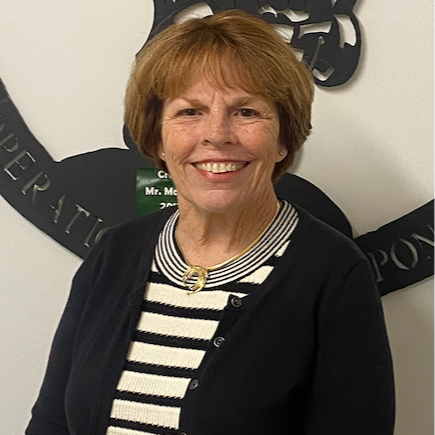
By Dr. Becky Foley, Superintendent, Winthrop Public Schools
“It is better to debate a question without settling it than to settle a question without debating it.” — Joseph Joubert, Pensées (Thoughts)
Election Day is quickly approaching, and in a little over a month, the signs will come down, the campaign advertisements will fade, and the elections will be behind us. Yet the conversations we have with one another will continue. In many ways, those conversations matter just as much, if not more, than the elections themselves.
One of the guiding principles of Winthrop Public Schools is preparing our students to leave high school as effective communicators. We want them to communicate with purpose, listen carefully, express their ideas clearly, and engage thoughtfully with perspectives that may differ from their own. At the heart of all of this is civil discourse.
The word civil is important. It asks us to approach one another with courtesy, respect, and consideration—even when we disagree.
As I watch and listen to the political conversations surrounding this election, I am sometimes reminded how difficult that can be. Campaign advertisements, interviews, and social media can quickly become places where disagreement turns into personal criticism. As an American citizen and as an educator, I want our students to see something different. I want them to see that it is possible to hold strong beliefs while still treating others with dignity and respect.
In Winthrop Public Schools, we talk with our students about the power of their words. At the elementary level, morning meetings provide opportunities for students to listen, share, and learn from one another. At the secondary level, advisory meetings create space for students to consider different perspectives. These experiences are not simply about teaching students what to say. They are about helping them understand how to communicate—especially when conversations become difficult.
We know that disagreement is not something to fear. In fact, thoughtful disagreement can help us learn, challenge our assumptions, and see an issue from a perspective we may not have considered. But how we disagree matters. When our words become aggressive, dismissive, or insulting, we create walls rather than opportunities for understanding. When we listen with curiosity and respond with respect, we create space for meaningful dialogue.
Our students are watching. They watch their teachers. They watch their parents, families, and other leaders. They watch how adults respond when they disagree. And, increasingly, they see these interactions play out on social media, where a thoughtful conversation can quickly deteriorate into name-calling and personal attacks.
The adults in our community have an important opportunity—and responsibility—to model the kind of communication we hope our students will carry into the future. Today’s students are tomorrow’s voters, neighbors, community leaders, and elected officials. The example we set for them today will help shape the community they inherit tomorrow.
We are fortunate to have seven individuals running for the Winthrop School Board. I encourage our community to learn more about the candidates and engage in the process. A Candidates’ Forum will be held on October 29 at 6:00 p.m. at the Bailey Library. All are welcome to attend.
As Election Day approaches, I hope we can all pause and reflect on our own words and actions. The WPS core values of respect, compassion, and integrity anchor all of us, providing a shared roadmap for our students, staff, and families alike.
Perhaps the question we should ask ourselves is a simple one: “How can I model the behavior I hope to see in the leaders of tomorrow?”
Civil discourse does not begin with someone else. It begins with each of us—with the conversations we have with our neighbors, colleagues, friends, families, and even those with whom we strongly disagree. We do not have to think alike to treat one another well. We do not have to give up our convictions in order to make room for someone else’s perspective.
Let’s choose our words carefully. Let’s listen a little more deeply. Let’s disagree with respect. And together, let’s model for our students—and for one another—the kind of community we want Winthrop to be. Civil discourse begins with me. And it begins with you. Will you join me?